
WELCOME BONUS 300%
UP TO €2000 + 100
FREE SPINS
UP TO €2000 + 100
FREE SPINS
Home → Blackjack
Blackjack at Hexabet Casino: Variants, Rules and Payouts
Register Late Surrender correctly in three steps
The analysis of Blackjack Surrender indicates a specific rule modifier that impacts the game's mathematical profile by altering the house edge. This late surrender option allows players to forfeit half their bet after the dealer checks for blackjack, effectively reducing the casino's advantage by 0.08 percentage points compared to standard play without this feature.
In contrast to early surrender which can reduce the house edge by up to 0.6 percentage points, late surrender is significantly less valuable and far more common in modern online tables. The mechanic requires the player to act only after the dealer verifies they do not hold an immediate natural blackjack, ensuring the surrender decision is made under stricter conditions than its earlier counterpart.
Consequently, utilizing this rule correctly preserves capital by returning 50 percent of the original stake when the hand is statistically unfavorable. This specific payout structure mitigates losses on weak starting hands, providing a tangible benefit that improves the overall return to player percentage for those who consistently apply this strategic option during gameplay sessions.
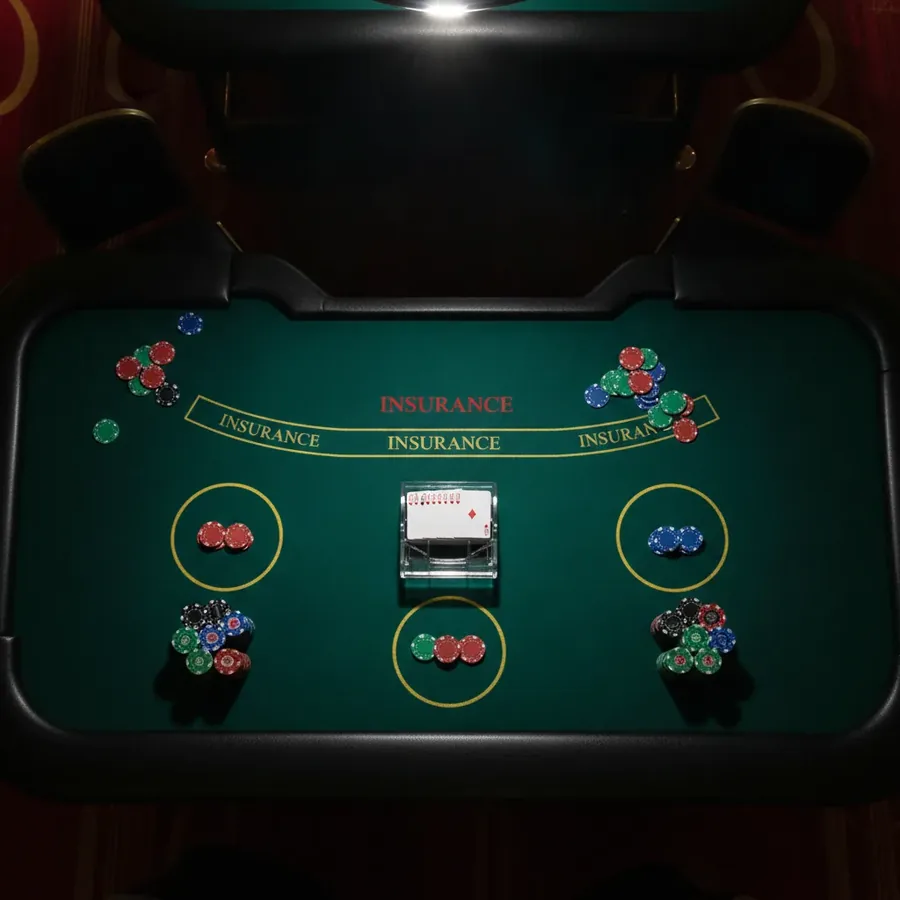
Which table limits suit 20 EUR balance?
Blackjack Party hosted by Evolution sets minimum bets at 1.00 EUR and maximum limits at 1.000 EUR, offering a wide range for various bankroll sizes. This particular live table features a party atmosphere with two moderators, creating an engaging environment while maintaining accessible entry points for players testing strategies with smaller initial deposits.
Lightning Blackjack also provided by Evolution operates with stakes ranging from 1 EUR to 2.500 EUR per hand, accommodating higher rollers seeking larger volatility. The game incorporates lightning multipliers up to 25x on winning hands, adding an extra layer of excitement and potential payout variance beyond the standard base game returns of 99.56 percent RTP.
Quantum Blackjack Plus from Playtech presents even higher stakes with limits between 1 EUR and 5.000 EUR, targeting experienced players comfortable with significant financial exposure. Quantum multipliers can reach up to 1,000x on three-card combinations totaling 21 points, drastically increasing potential rewards while requiring a balance capable of sustaining the higher betting thresholds associated with this premium title.
Soft Hand and Hard Hand Practically Distinguished
A soft hand contains an Ace counted as eleven without busting, allowing flexibility since hitting cannot immediately exceed twenty-one, whereas a hard hand lacks this protective Ace value. This distinction fundamentally alters basic strategy decisions, particularly regarding whether to hit or stand when facing different dealer upcards in standard six-deck blackjack scenarios.
Dealer rules significantly impact these distinctions, with Soft 17 rules adding 0.22 percentage points to the house edge if the dealer hits rather than stands. Resplitting Aces improves the player's position by 0.08 percentage points, while doubling after split adds another 0.14 percentage points, collectively refining the optimal approach for managing soft versus hard totals.
Understanding these mechanics is crucial because the house edge varies from 0.15 percent in single-deck games to 0.46 percent in six-deck S17 DAS environments. Players must adjust their strategy based on the specific rule set, as the presence or absence of soft hand advantages directly influences the long-term expected return on every wager placed at the virtual table.
Bonus 100 EUR with 10 percent credit
The Hexabet Casino welcome bonus offers 300 percent up to €2,000 plus 100 free spins, creating a substantial initial bankroll enhancement for new registrants. This promotional structure provides a significant multiplier on the first deposit, allowing players to extend their playing time and explore various game options with increased leverage compared to standard deposit matches.
Tischspiele contribute only 10 percent toward the bonus wagering requirement, meaning that blackjack and other table games are heavily restricted in fulfilling the rollover conditions. For a 100 EUR bonus, this low contribution rate necessitates much higher turnover volume compared to slots which count 100 percent, making table game play inefficient for clearing the attached promotional terms effectively.
Calculating the required turnover reveals that contributing 10 percent means each 1 EUR wagered only counts as 0.10 EUR toward the goal, demanding ten times the action. This restriction forces players to either engage in high-volume slot play or accept that table game contributions will barely move the needle on the bonus clearance progress, impacting overall strategic planning for withdrawal eligibility.
Splitting tens costs expected value: better stand
Standard basic strategy dictates standing on a total of twenty when dealt two tens, as splitting them reduces the expected value due to the loss of a strong defensive hand. The probability of improving both resulting hands simultaneously is low, and the average outcome of splitting frequently results in two weaker hands that are more susceptible to dealer busts or superior final totals.
Comparing the house edge variations highlights that rule changes like hitting soft 17 add 0.22 percentage points to the casino's advantage, emphasizing the importance of optimal play. Deviating from basic strategy by splitting tens introduces unnecessary variance and increases the likelihood of losing both bets, whereas standing preserves the high-probability winning position inherent in the twenty-point total.
The mathematical consensus confirms that keeping tens together yields a higher long-term return than splitting, regardless of the dealer's upcard in most scenarios. This principle holds true across various deck compositions, including the six-deck games with 0.46 percent house edge, where adherence to strict basic strategy remains the primary method for minimizing the casino's statistical advantage over time.
Blackjack variants at a glance
| Variant | Payout | House edge | Rule | Bet range |
|---|---|---|---|---|
| Blackjack Surrender (Late Surrender) – Regel-Effekt | n.a. (Regel-Modifikator) | −0.08 Prozentpunkte | Spieler gibt Hand nach Dealer-Blackjack-Prüfung auf, verliert die Hälfte des Einsatzes. Verbessert RTP um ca. 0.08 Prozentpunkte. Early Surrender ist wesentlich wertvoller (bis −0.6 Prozentpunkte), aber extrem selten. | Rückzahlung 50% des Einsatzes |
| Blackjack Liberal Vegas Strip (liberale Regeln, 3:2) | 99.72% | 0.28% | Günstigste Regelkombination: S17 + DAS + Resplit + Late Surrender. Standardabweichung 1,15 | Blackjack 3:2, Gewinn 1:1 |
| Blackjack Auszahlung 6:5 statt 3:2 (6 Decks) | 98.15% | 1.85% | Ersatz von 3:2 durch 6:5 fügt exakt +1.39 Prozentpunkte zum Vorteil des Casinos hinzu – stärker als jede andere Regeländerung. Bei $10 Einsatz zahlt Blackjack $12 statt $15. | Blackjack 6:5, Gewinn 1:1 |
| Blackjack Insurance / Versicherung (6–8 Decks) | 92.53% | 7.47% | Separate Nebenwette bis 50% der Hauptwette, wenn der Dealer ein Ass hat. Basisstrategie schreibt IMMER Ablehnung vor (außer Karten zählen bei True Count ≥ +3). Bei einem Deck Vorteil ≈ 5.88% | Insurance 2:1 |
| Blackjack 6 Decks, S17, DAS, DOA, Auszahlung 3:2, Basisstrategie | 99.54% | 0.46% | Dealer steht auf Soft 17; Verdopplung auf jeder Zweierkarte; Verdopplung nach Split erlaubt; keine Aufgabe. Basisstrategie ist für diesen Wert zwingend | Blackjack 3:2, normaler Gewinn 1:1, Insurance 2:1 |
| Blackjack Ein Deck, klassische Regeln, 3:2 | 99.85% | 0.15% | Weniger Decks = niedrigerer Vorteil; ein Deck gibt ca. −0.48 Prozentpunkte gegenüber 8 Decks. Oft durch 6:5 Auszahlung kompensiert. | Blackjack 3:2, Gewinn 1:1 |
When can you increase your bet?
The Blackjack Party table operated by Evolution allows wagers ranging from 1.00 EUR up to 1.000 EUR, providing a wide betting spectrum for various bankroll sizes. This high limit accommodates professional players seeking significant exposure during the lively party atmosphere hosted by two dedicated moderators. Consequently, high rollers can adjust their stakes dynamically while enjoying the energetic environment without hitting restrictive caps. The maximum potential win is not explicitly capped within the standard rules of this specific live variant.
Lightning Blackjack offers a broader financial range with bets between 1 EUR and 2.500 EUR, significantly higher than the standard table limits found elsewhere. Players can leverage unlimited seating availability to join any available seat at the virtual table regardless of current occupancy levels. This structure ensures that larger wagers are accepted efficiently, allowing for substantial payouts when lightning multipliers hit. The RTP remains stable at 99.56% despite the variable multiplier mechanics applied to winning hands.
Quantum Blackjack Plus Live from Playtech supports the highest entry barriers with minimum bets starting at 1 EUR and maximums reaching 5.000 EUR per hand. This exceptional upper limit caters exclusively to VIP segments who require elevated tables for their strategic gameplay sessions. The quantum multipliers can boost payouts up to 1.000x on three-card combinations totaling 21 points, creating massive win potential. Such high limits demand precise bankroll management to sustain play through inevitable variance periods in the game.
Shoe, Cut Card, and 75 Percent Penetration
Blackjack 6 Decks utilizes six standard decks shuffled together, which increases the house edge to 0.46% compared to single-deck variations offering 0.15%. The use of multiple decks reduces the effectiveness of card counting strategies by diluting the impact of removed cards on remaining probabilities. Players relying on basic strategy must adhere strictly to optimal decisions to maintain the theoretical return rate of 99.54%. This configuration represents a standard industry setup balancing game speed with player advantage preservation mechanisms.
The Liberal Vegas Strip variant employs favorable rule combinations including S17, DAS, Resplit, and Late Surrender to achieve a superior RTP of 99.72%. These liberal conditions reduce the house edge to just 0.28%, making it one of the most player-friendly blackjack options available online. The standard deviation of 1.15 indicates moderate volatility, ensuring balanced win frequency against payout magnitude over extended play sessions. Players benefit significantly from these rules as they directly enhance long-term profitability expectations compared to stricter variants.
Late Surrender allows players to forfeit half their bet after the dealer checks for blackjack, improving the overall RTP by approximately 0.08 percentage points. This rule provides a crucial safety net against strong dealer upcards, particularly when holding weak hands like 16 against a dealer nine. Early surrender is far more valuable but extremely rare, whereas late surrender offers a practical compromise for risk management. The 50% return upon surrender preserves capital better than playing out a statistically losing hand under standard rules.
What a Natural Blackjack Practically Pays Out
A natural blackjack pays 3:2 on the initial wager, meaning a 100 EUR bet yields a 150 EUR profit plus the original stake returned. This generous payout ratio is fundamental to maintaining the low house edge of 0.46% in the six-deck game version analyzed here. Players must ensure the table adheres to this standard because 6:5 payouts drastically alter the mathematical expectation of the game negatively. The distinction between these ratios defines the core value proposition for serious blackjack enthusiasts seeking fair returns.
Conversely, tables offering 6:5 payouts on blackjacks increase the house edge to 1.85%, representing a massive disadvantage for all participants involved. A 10 EUR bet only returns 12 EUR instead of the expected 15 EUR, effectively reducing player earnings by nearly twenty percent. This single rule change imposes a heavier cost than any other modification, such as dealer hitting soft seventeen or restricted doubling options. Savvy players should always verify the payout structure before sitting down to avoid this costly trap entirely.
The welcome bonus of 300% up to 2.000 EUR plus 100 free spins requires careful consideration regarding contribution rates towards wagering requirements. Table games contribute only 10% to the turnover obligation, making them inefficient for clearing bonus funds compared to slots contributing 100%. Consequently, using blackjack to meet wagering demands requires significantly higher volume to achieve the same clearance progress as slot machines. This restriction forces players to either accept slower progression or seek alternative strategies for bonus utilization efficiency.
Latency under 2 seconds at the live table
Evolution's Lightning Blackjack delivers actions with latency typically under 2 seconds, ensuring real-time interaction between the player decision and the dealer execution. This rapid response time minimizes delays that could disrupt the flow of the game and affect strategic timing for split or double opportunities. The seamless transmission contributes to an immersive experience where players feel directly connected to the live studio environment instantly. High-speed connectivity remains essential for maintaining trust in the fairness and timeliness of every dealt card outcome.
Playtech’s Quantum Blackjack Plus Live maintains similar performance standards with action latencies consistently below 2 seconds during peak traffic hours. The platform handles complex quantum multiplier calculations without introducing perceptible lag, preserving the integrity of the betting cycle for all users. Fast processing ensures that side bets and main wagers resolve simultaneously, preventing confusion regarding winning combinations or payout triggers. Reliable technical infrastructure supports the high-stakes nature of the 5.000 EUR maximum bet limit offered on this table.
Blackjack Party by Evolution combines fast deal speeds with engaging moderator interactions, keeping latency low while enhancing the entertainment value significantly. The dual-host format adds personality without compromising the technical performance required for accurate game resolution and result reporting. Players benefit from both the speed of digital distribution and the human element that traditional brick-and-mortar casinos provide inherently. This balance ensures that technological limitations never interfere with the clarity of the final hand results presented.
Perfect Pairs vs 21+3 in House Edge
Insurance bets carry a steep house edge of 7.47% with an RTP of 92.53%, making them highly unfavorable for most strategic players. Basic strategy dictates always rejecting insurance unless counting cards reveals a true count of +3 or higher in the remaining deck. This negative expectation stems from the independent probability of the dealer having a ten-value card versus the fixed 2:1 payout offered. Avoiding this side bet preserves the primary game's mathematical advantage by eliminating unnecessary losses over time.
These bets rely on specific card combinations appearing early in the shoe, creating distinct probability distributions separate from the main hand outcome. Players often chase large multipliers on these wagers despite their generally higher house edges compared to optimal main game play. Understanding the separate odds helps manage expectations regarding potential wins versus the statistical likelihood of loss occurrence.
Four hours of play with 300 EUR bankroll
The standard wagering requirement for the 300% welcome bonus up to €2,000 demands a turnover calculation based on the deposited amount. A deposit of 300 EUR generates a 900 EUR bonus, creating a total balance of 1,200 EUR subject to specific contribution rates. Table games contribute only 10% toward this turnover, meaning every 10 EUR wagered counts as just 1 EUR toward the requirement. Consequently, players must wager 40 times the bonus value, equating to 36,000 EUR in table game bets to clear the funds.
Table game contributions significantly extend the time required to meet the bonus conditions compared to slot players. While slots count at 100%, blackjack variants like those offering 99.85% RTP are restricted to a mere 10% contribution rate. This restriction forces players to engage in high-volume betting strategies that may not align with optimal mathematical play. The disparity ensures that the house edge accumulates faster for bonus hunters attempting to utilize low-house-edge tables.
A four-hour session with a 300 EUR bankroll illustrates the difficulty of clearing the bonus through table games. Assuming an average bet of 10 EUR per hand and 60 hands per hour, a player places 2,400 bets totaling 24,000 EUR over the period. This volume falls short of the 36,000 EUR turnover needed for the 900 EUR bonus when using 10% contributing games. The remaining balance remains locked until the full wagering obligation is satisfied through eligible gaming activity.
Clicked Too Late: Hand Is Automatically Held
Quantum Blackjack Plus Live from Playtech introduces dynamic multipliers that can reach up to 1,000x on three-card combinations totaling 21 points. These multipliers apply to the initial deal before any player decisions regarding hits or stands are finalized. If a player fails to interact within the designated timeframe, the software automatically holds the current hand configuration. This automatic hold prevents further strategic adjustments after the multiplier outcome has been determined.
The minimum stake for Quantum Blackjack Plus Live ranges from 1 to 5,000 EUR, accommodating both casual and high-stakes participants. The game features a theoretical return to player rate of 99.57% when utilizing optimal strategy against these quantum modifiers. However, the automatic hold mechanic bypasses the player's ability to double down or split pairs after the initial cards are revealed. This constraint reduces the effective agency of the participant during high-multiplier rounds.
Lightning Blackjack by Evolution offers a contrasting structure with multipliers capped at 25x on winning hands. Its minimum entry point starts at 1 EUR, allowing broader accessibility compared to the higher limits of the Playtech variant. Players engaging with Lightning Blackjack must still adhere to strict timing protocols for their primary decisions. Failure to act results in the system defaulting to a stand, potentially leaving valuable hands unoptimized against the dealer's upcard.
Evolution's Blackjack Party provides a distinct environment with two moderators managing the flow of the game. The betting range spans from 1,000 to 1,000 EUR, focusing on a mid-to-high tier audience rather than micro-stakes players. Unlike the quantum or lightning variants, this table relies on traditional rules without external multiplier interventions. The automated hold feature remains consistent across all live dealer interfaces to maintain game integrity and pace.
Splitting Eights vs Standing on 16
Basic strategy dictates that players should always split a pair of eights regardless of the dealer's upcard. Standing on a hard 16 presents a significant disadvantage because the probability of busting upon hitting exceeds 60%. By splitting eights, the player transforms a weak hand into two separate hands starting with eight, each having a favorable chance to improve. This decision minimizes the expected loss compared to the inevitable decline associated with standing on sixteen.
The house edge for standard six-deck blackjack with surrender rules stands at 0.46% when basic strategy is strictly followed. Deviating from the split-eights rule increases this edge substantially, particularly when the dealer shows a ten or an ace. Surrender options allow players to forfeit half their bet on a 16 against a ten, but splitting eights remains superior in most scenarios. The mathematical expectation of splitting yields a smaller negative return than holding or surrendering in comparable situations.
Rules such as Resplit Aces (RSA) and Double After Split (DAS) further enhance the viability of splitting strategies. DAS allows players to double down on new hands created after splitting, adding potential value to the initial division of eights. RSA improves returns by approximately 0.08 percentage points, making aggressive splitting more profitable in liberal rule sets. These modifiers support the fundamental principle that splitting weak pairs like eights is mathematically justified over conservative plays.
Insurance bets offer a side option paying 2:1 if the dealer has a blackjack, but they carry a house edge of 7.47%. This side bet is generally unfavorable unless the player employs card counting techniques with a true count of +3 or higher. For the average participant relying on basic strategy, accepting insurance on a split hand or original deal leads to long-term losses. The separate nature of the insurance wager does not influence the primary outcome of the split eights scenario.
16 vs 10 played incorrectly: most common error
Hitting a hard 16 against a dealer's ten is a frequent error among novice blackjack players who fear busting. Statistical analysis shows that standing on 16 loses more frequently than hitting, despite the high risk of exceeding 21. When hitting, the player wins if the next card is a five or lower, which occurs roughly 30% of the time. Standing guarantees a loss whenever the dealer completes a natural or draws to 17 or higher, which happens often.
The presence of late surrender rules modifies the optimal play for a 16 against a ten, allowing players to forfeit 50% of the bet. This rule improves the overall return by approximately 0.08 percentage points by cutting losses early in bad situations. Without surrender availability, hitting remains the statistically correct choice over standing to minimize the house edge. The decision hinges on comparing the expected loss of hitting versus the guaranteed loss of standing.
Variations in deck composition and rules significantly impact the severity of this common mistake. In games with six decks and soft 17 rules, the house edge is 0.46% under perfect basic strategy. Incorrectly standing on 16 against a ten can inflate the effective house edge for that specific hand by several percentage points. Consistent adherence to basic strategy charts is essential to prevent these costly deviations during live play.
Online platforms often display real-time strategy hints to assist players in avoiding such errors. Features like Quantum Blackjack Plus Live provide visual cues for optimal moves alongside multiplier outcomes. However, reliance on these aids does not replace the need for understanding underlying probabilities. Players who ignore basic strategy recommendations consistently underperform compared to those who follow the mathematical guidelines.
Which rule variants does the software show?
The Liberal Vegas Strip variant represents the most favorable condition for players, offering a house edge of just 0.28%. This version combines Soft 17 rules, Double After Split, Resplit Aces, and Late Surrender into a single package. The standard deviation of 1.15 indicates moderate volatility compared to other table games. Players seeking maximum return should prioritize tables explicitly labeled with these liberal parameters.
Standard six-deck games typically enforce Hard 17 rules and prohibit doubling after splits, raising the house edge to 0.46%. These restrictions reduce the player's ability to capitalize on favorable deck compositions during split hands. The absence of surrender options further limits damage control when dealt weak hands against strong dealer upcards. Such configurations are common in lower-tier live dealer rooms where operational costs are minimized.
Games paying 6:5 for blackjack instead of the traditional 3:2 drastically increase the house edge to 1.85%. This single rule change adds 1.39 percentage points to the casino's advantage, outweighing nearly all other modifications. A 10 EUR bet returns only 12 EUR on a natural blackjack rather than the standard 15 EUR. Identifying and avoiding 6:5 tables is critical for maintaining a viable long-term strategy.
Live dealer interfaces clearly display the specific rule set active for each table session. Providers like Evolution and Playtech list parameters such as dealer hit/stand rules and split allowances prominently. Players must verify these details before placing bets to ensure alignment with their preferred strategy. Misinterpreting the visible rules can lead to suboptimal decisions and increased financial exposure.
Contact
Live - online chat
Banking









Providers












Hexabet Casino 2026